Kilmer Tórrez
It started as the website of a natural medicine practice and grew into an interactive pre-consultation: patients mark what they feel on a 3D body and the doctor gets an organized WhatsApp message.
- Type
- Web
- For whom
- Natural medicine practice
- My role
- Design and development

Context
What it was
For whom
Why it was made
What I received
Photos of the doctor from two shoots, the logo as a PNG with no vector version, a social media piece listing the therapies, the WhatsApp number and visual references for palettes and sites.
The challenge
What had to be solved
The hardest part
How it evolved
Stage 01
Website
September 2026. Launched
The practice's digital presence: who the doctor is, which therapies she offers, where she practices and how to book through WhatsApp, on a single page.
Scope
- Information architecture
- Visual system
- User experience
- Development and implementation
Decisions
I started from the social media piece and the photos. I built a custom design system (olive, sage, acqua and solace; Urbanist and Figtree) and reviewed it with the doctor over 6 rounds of annotated screenshots. The therapy list from the first round became a photo carousel, and in round 4 she asked for light panels with blur. 20 hours of work.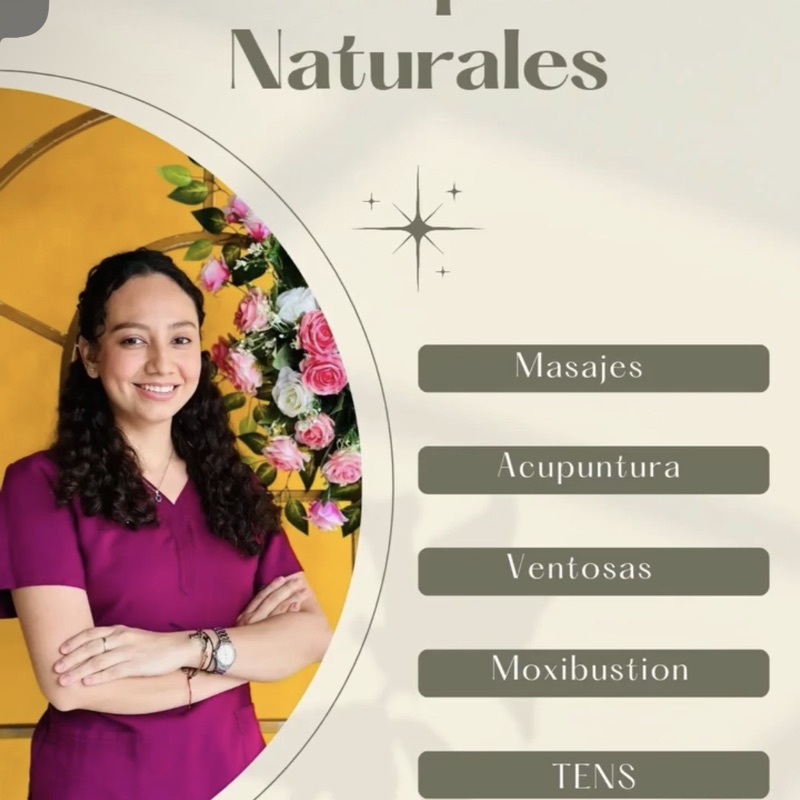
Starting point: the social media piece. 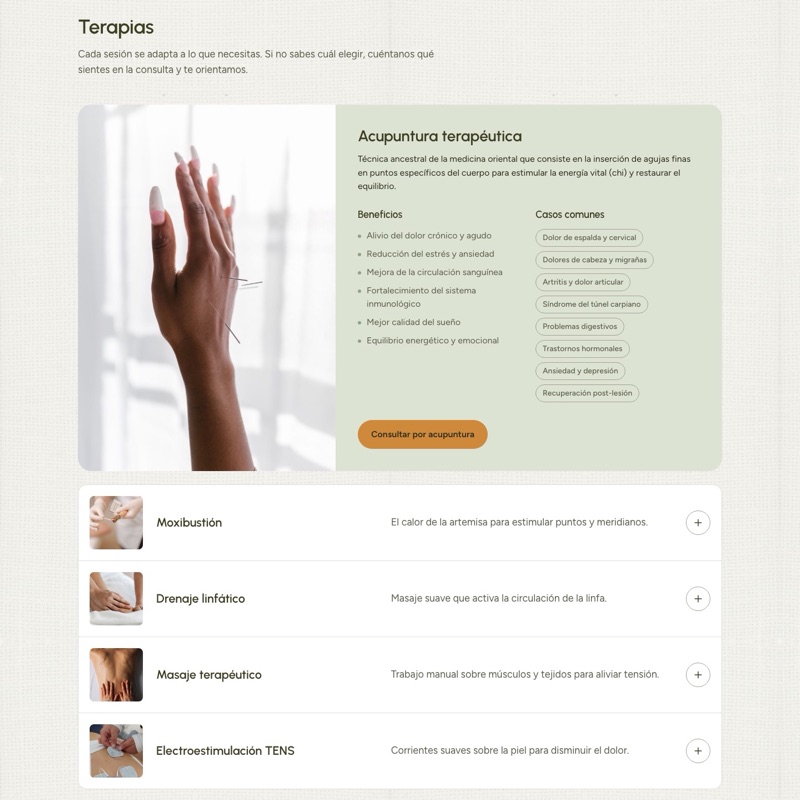
Round 1: the therapies as a list. 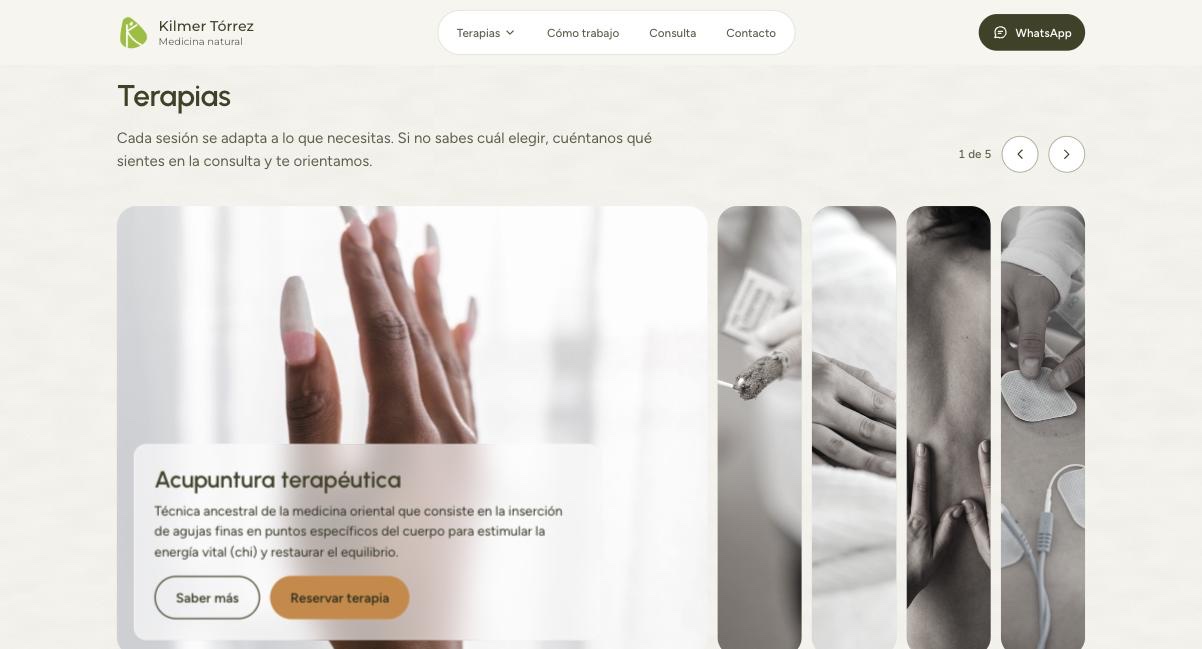
Final version: each therapy on a card that explains it and leads to booking. 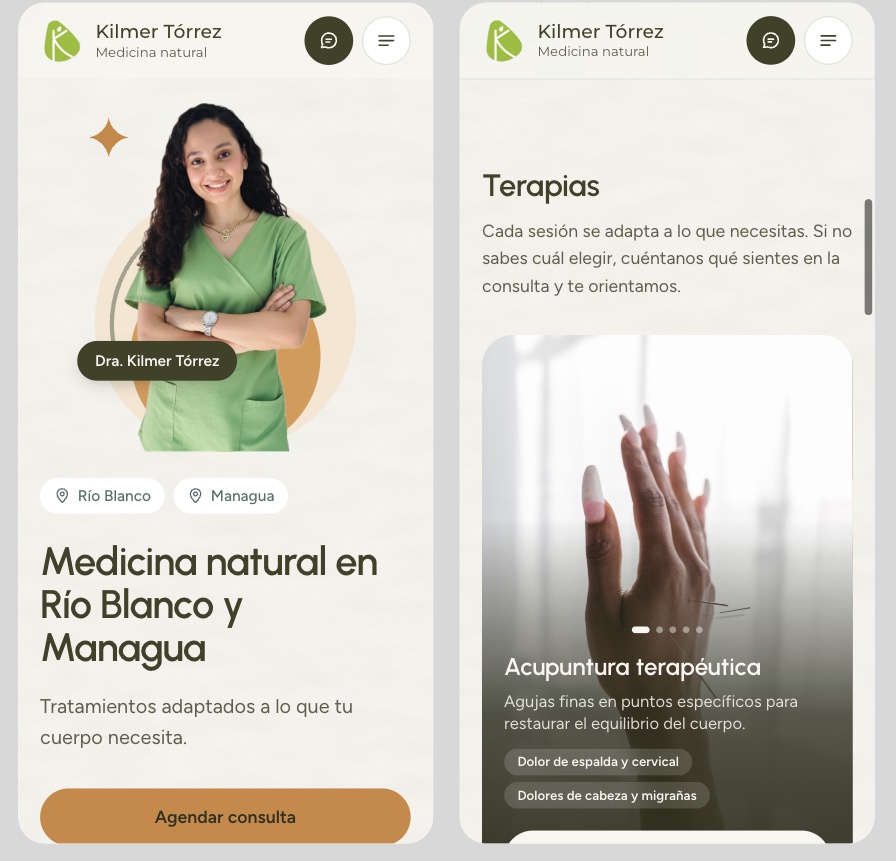
On mobile: the doctor first, and one therapy at a time. Stage 02
Pre-consultation tool
October 2026. MVP
After the site, the consultation became a tool of its own. Each patient's first questions took time: now patients describe what they feel before writing and the doctor gets an organized message.
Scope
- Three-stage questionnaire
- 3D body to mark the area
- Information before the appointment
- WhatsApp-ready message
Try the prototypeDecisions
It's a separate mini app that opens from a link, even with the therapy already chosen. The patient rotates a female or male body, marks the area and picks the sensation; then adds duration, intensity and conditions, and finally chooses where to be seen. The body was built in three.js with freely licensed (CC0) MakeHuman models, with a fallback list of areas. It stores no data: the message opens in the patient's WhatsApp.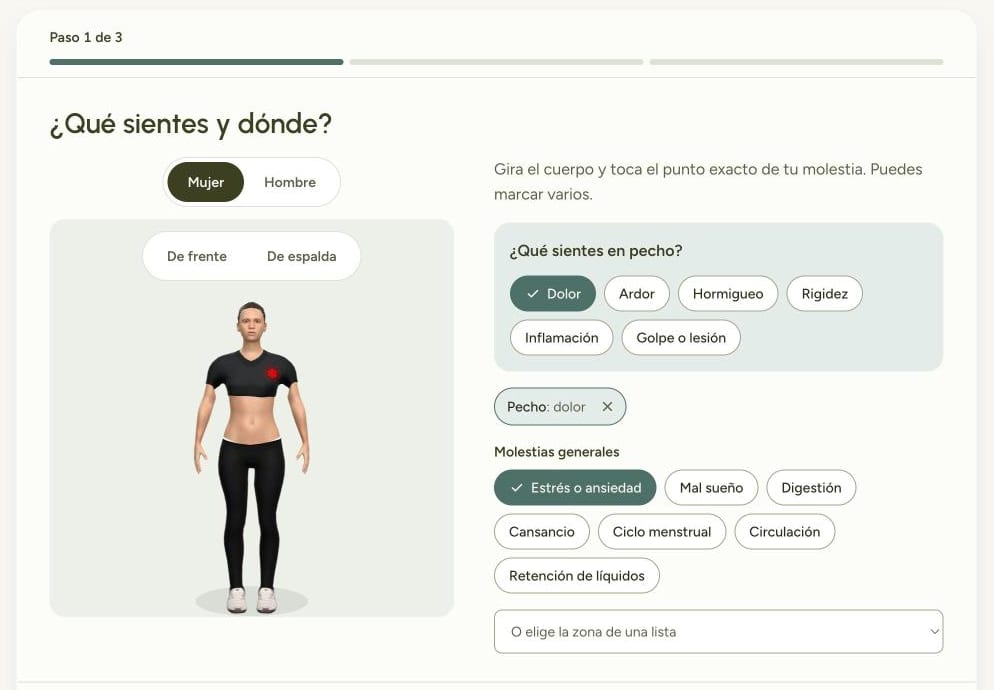
Step 1: what you feel and where, on a body you can rotate. 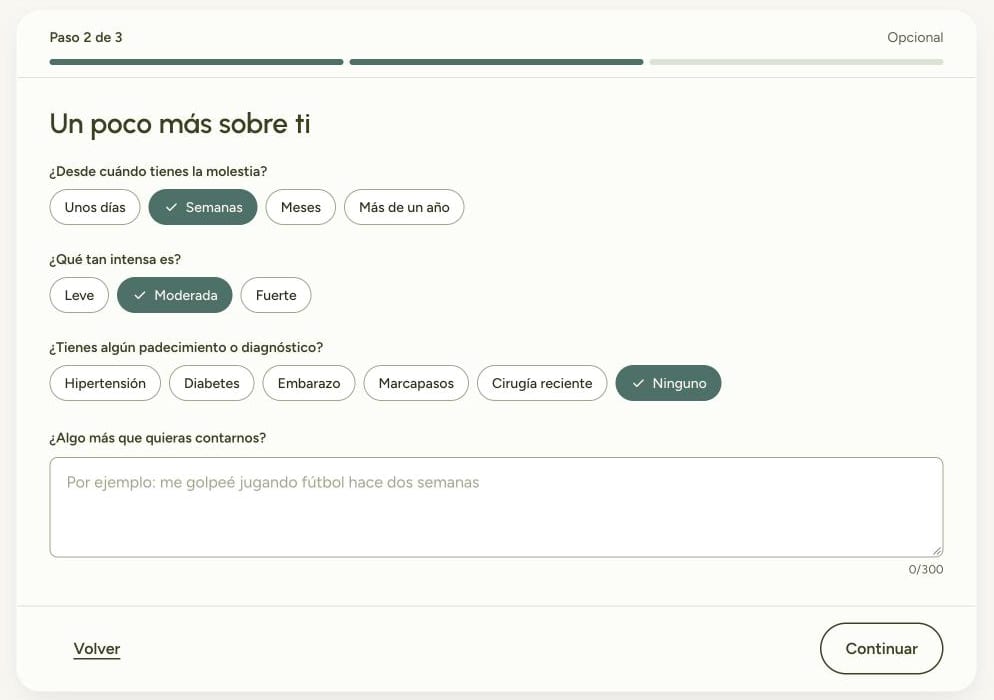
Step 2: since when, how strong and any conditions. 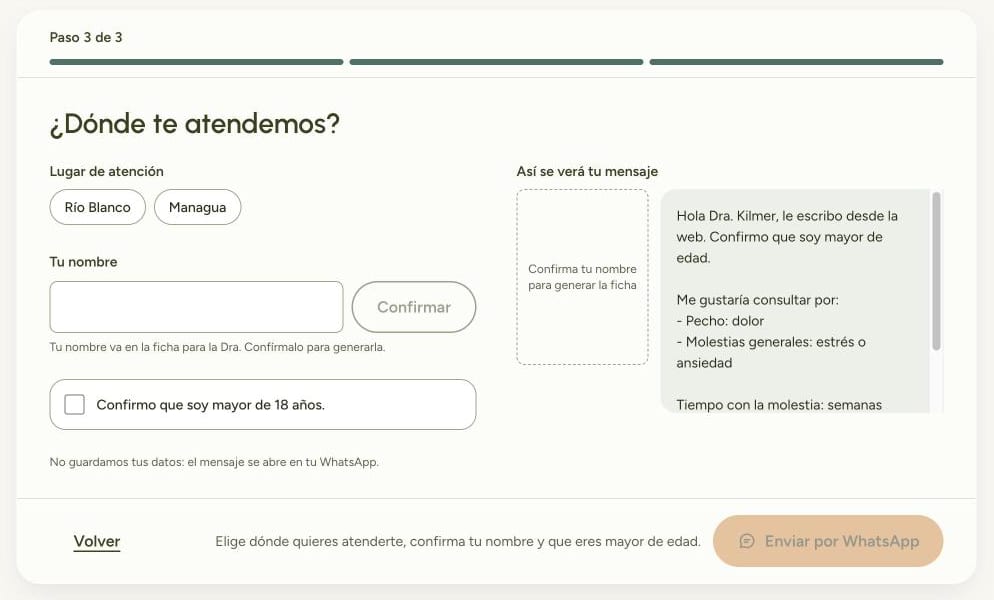
Step 3: where to be seen and the message exactly as the doctor will get it.


My work
What I did
Who with
Result
What was delivered
Metrics
- The doctor gets the area, sensation, duration and intensity from the first message, instead of asking for them one by one.
What I learned
What I'd do differently
Next update
A calendar for scheduling appointments and visits, so patients can book from the same consultation.